
Ever since Raakh arrived on Prime Video, viewers have been asking the same unsettling question: Did this really happen?
It is not hard to see why. Unlike many crime thrillers that rely on exaggerated villains or impossible twists, Raakh feels disturbingly real. The fear, the helplessness of the victims’ family, the frustration of the investigation, and the brutality of the crime all carry a weight that lingers long after the credits roll.
The answer is both simple and horrifying.
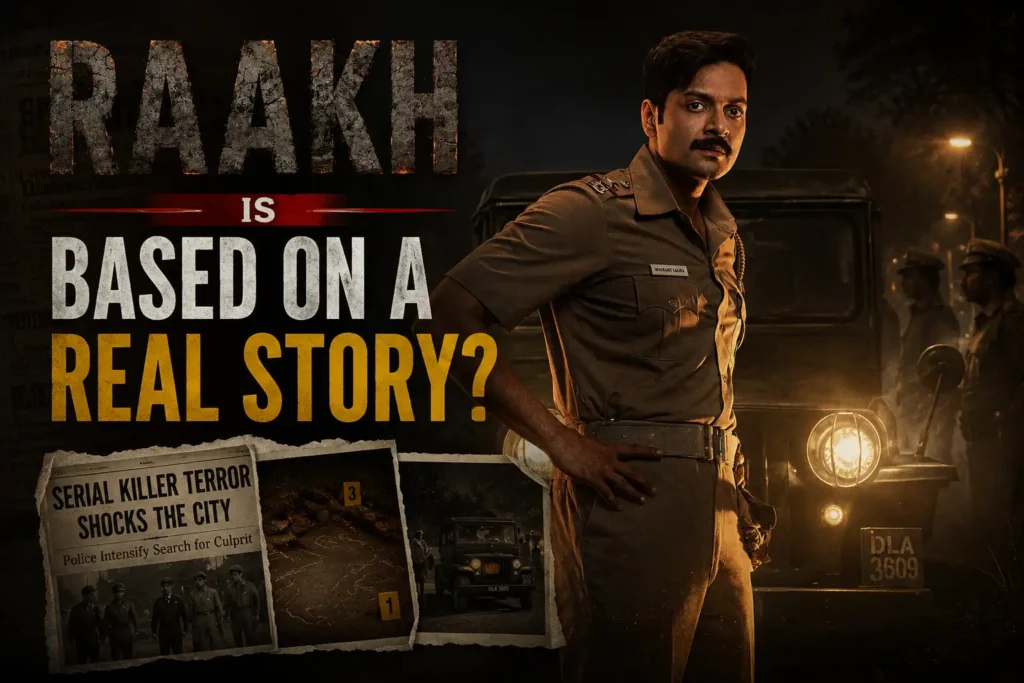
Yes, Raakh is inspired by a real-life crime that shook India to its core nearly five decades ago. While the series changes names, introduces fictional characters, and expands parts of the investigation, its foundation lies in one of the country’s most infamous criminal cases—the 1978 Ranga-Billa case.
And the real story is every bit as tragic as the series suggests.
Is Raakh Based on a Real Story?
Yes. Raakh draws inspiration from the kidnapping and murder of siblings Geeta Chopra and Sanjay Chopra in Delhi in 1978.
The series is not presented as a documentary, nor does it recreate every event exactly as it happened. Instead, it uses the real case as the emotional and historical backbone of its narrative. Characters are renamed, certain events are dramatized, and additional themes are woven into the story, but the central tragedy remains rooted in reality.
That connection is what makes Raakh so difficult to watch at times. Viewers know they are not simply witnessing a fictional nightmare. They are watching a story born from a crime that once dominated headlines and left an entire nation horrified.
The Real Story Behind Raakh
To understand why Raakh resonates so deeply, it helps to know the true events that inspired it.
On August 26, 1978, siblings Geeta Chopra and Sanjay Chopra left their home in Delhi Cantonment. The teenagers were heading to participate in a program at All India Radio.
It was supposed to be an ordinary day.
Instead, it became one of the darkest chapters in India’s criminal history.
While trying to find transportation, the siblings encountered two criminals driving a stolen car. Those men were Kuljeet Singh, better known as Ranga, and Jasbir Singh, known as Billa.
What happened next would shock the country.
The Kidnapping That Terrified Delhi
According to reports from the time, the siblings fought back fiercely.
Witnesses later recalled hearing cries for help and seeing signs of resistance from inside the moving vehicle. Yet confusion, delayed responses, and unfortunate circumstances allowed the abductors to escape.
For two days, fear spread across the city.
Families followed news updates anxiously while police searched for clues. Hope remained that the children would somehow be found alive.
That hope was shattered when their bodies were discovered in Delhi’s Ridge area.
The brutality of the crime generated national outrage unlike anything seen in years.
Looking for more reviews and entertainment updates? Here are a few articles you may enjoy next: Raakh Review & OTT Verdict: Hit or Flop
Who Were Ranga and Billa?
Long before becoming synonymous with one of India’s most notorious crimes, Ranga and Billa were career criminals.
Their names would eventually become part of India’s criminal folklore, referenced whenever discussions turned to violent crimes that altered public consciousness.
The case transformed them into symbols of fear.
Even decades later, many Indians who were alive during that period remember exactly where they were when they first heard the news.
That lingering cultural memory is one reason Raakh feels less like entertainment and more like reopening an old wound.
The Manhunt That Captured a Nation’s Attention
The search for the killers became a matter of national urgency.
Investigators followed multiple leads while public pressure mounted with each passing day.
One of the crucial breakthroughs reportedly came from injuries sustained by the criminals during the victims’ resistance. The evidence helped authorities narrow their search and eventually track down the suspects.
Following an extensive manhunt, Ranga and Billa were arrested while attempting to flee.
Their capture made front-page news across the country.
For many citizens, the arrest brought relief. But it could not erase the grief left behind by the tragedy.
The Trial and Its Aftermath
The case moved swiftly through the legal system due to the enormous public attention it received.
Both men were found guilty of kidnapping and murder.
They were sentenced to death and later executed in Delhi’s Tihar Jail in 1982.
Yet the story did not end there.
The memory of Geeta and Sanjay Chopra continued to live on. Their courage during the ordeal became a symbol of bravery, and their names remain associated with awards recognizing exceptional courage among children.
Their legacy transformed a terrible tragedy into a lasting reminder of resilience.
How Raakh Changes the Real Story
While the inspiration is unmistakable, Raakh is not a direct retelling.
The series renames the victims as Suman and Sahil Arora. Their parents are portrayed by Sonali Bendre and Aamir Bashir, while the fictionalized killers are given new identities.
Perhaps the biggest addition is the character played by Ali Fazal.
His police officer is not a straightforward recreation of a real investigator. Instead, the character allows the series to explore broader themes surrounding law enforcement, social divisions, and the challenges of seeking justice during that era.
These changes help transform a historical crime into a dramatic narrative while preserving the emotional truth of the original events.
Explore more handpicked reviews and guides from OKReviewer: Haunted 3D: Echoes of the Past Review
Why the Story Still Feels Relevant Today
Nearly fifty years have passed since the Ranga-Billa case, yet its impact remains surprisingly strong.
Part of that is because the crime marked a turning point in public perception.
For many families, it shattered the belief that such horrors happened only to other people. The incident changed conversations about safety, trust, and vulnerability in urban India.
Raakh captures that loss of innocence remarkably well.
The series is not merely interested in the crime itself. It focuses on what the crime leaves behind—the grief of parents, the scars on a city, and the emotional wreckage that continues long after headlines disappear.
That perspective gives the story a depth that many crime dramas struggle to achieve.
Does Raakh Stay Faithful to the Real Events?
In spirit, yes.
The emotional core, historical backdrop, and central tragedy clearly draw from the Ranga-Billa case. However, the series also takes creative liberties to build a more expansive drama.
Viewers looking for a documentary-style recreation may notice differences. Those looking for an emotionally charged crime series inspired by real events will likely find that Raakh captures the essence of the tragedy while telling its own story.
Final Verdict
So, is Raakh based on a real story?
Absolutely.
Behind its fictional names and dramatized investigation lies the shadow of the 1978 Ranga-Billa case—a crime so shocking that it changed the way an entire generation viewed safety, justice, and innocence.
Knowing the real history makes Raakh even more haunting. The series is not frightening because of supernatural horrors or elaborate twists. It is frightening because it reminds us that the darkest stories are often the ones that actually happened.
And that truth lingers long after the final episode ends.
Related Reviews
Looking for more entertainment coverage? Explore these reviews from OKReviewer:
- Netflix Sweet Tooth Adaptation Review – Story breakdown, performances, ending explained, and our verdict.
- Made in India: A Titan Story Review – Complete box office analysis, audience response, and verdict.